

How to Top Up a Ideal Boiler
Low boiler pressure can stop your heating and hot water — often without warning.
In many cases, boiler pressure can be safely topped up — if it’s done correctly.
This guide helps you:
-
Check what pressure your boiler should be at
-
Understand whether it’s safe to top up
-
Know when to stop
-
Know when not to touch anything and call an engineer
If at any point you’re unsure — stop. Forcing parts or overfilling can cause damage.

What Model Do I Have?
Ideal boilers typically use one of the following filling systems:
• Internal tap filling loop
• External filling loop
Before topping up your boiler, it’s important to identify which filling loop you have, as the steps differ slightly for each type.
Ideal Boiler – Internal Tap Type Filling Loop
A common setup on Ideal boilers is an internal lever filling loop, usually operated by two small taps underneath the boiler.
Step 1
You can identify an internal filling loop by locating two valves.
🟦 Blue Flame Engineer Tips
Make sure you close both taps. If one is left open – No hot water will comefrom the hot tap, untill both are closed.
The taps / levers only move through 90 degrees
Also note that the taps can be difficult to see when the boiler is installed low to the ground or inside a cupboard.
Using a torch or phone light can make them much easier to locate.
Step 2 – Open the First Valve (Door)
Slowly open either one of the blue levers — it does not matter which one you open first.
Think of this like “opening the first door”
At this stage, water is allowed to travel up to the second valve, but nothing will happen yet.
You may hear a faint sound of water, but the boiler pressure will not increase at this point.
Step 3 – Open the Second Valve (Door) VERY Slowly
Now, very slowly open the second blue lever.
This is the second door.
Once this door is opened, water is allowed into the boiler and heating system.
Open this valve a tiny amount only — do not open it fully.
You should hear water running, and the pressure on the gauge will begin to rise.
Move the lever gently, as if you are just cracking a door open, not swinging it wide.
Blue Flame Tip
Opening this valve too quickly can cause the pressure to rise too fast.
Step 4 (Be very careful here)
Keep a close watch on the pressure gauge.
Once the pressure reaches just over 1 bar (do not exceed 1.5bar), close both taps.
Safety note (See gauge)
Do not overfill the pressure past 1.5 bar.
Overfilling can damage the boiler and heating system.

Ideal Boiler – Internal Tap Type Filling Loop
A common setup on Ideal boilers is an internal lever filling loop, usually operated by two small taps underneath the boiler.
Step 1
You can identify an internal filling loop by locating two valves.
🟦 Blue Flame Engineer Tip
Make sure you close both taps. If one is left open – No hot water will comefrom the hot tap, untill both are closed.
This is very common and nothing to worry about.
Also note that the taps can be difficult to see when the boiler is installed low to the ground or inside a cupboard.
Using a torch or phone light can make them much easier to locate.
Step 2 – Open the First Valve (Door)
Slowly open either one of the blue levers — it does not matter which one you open first.
Think of this like “opening the first door”
At this stage, water is allowed to travel up to the second valve, but nothing will happen yet.
You may hear a faint sound of water, but the boiler pressure will not increase at this point.
Step 3 – Open the Second Valve (Door) VERY Slowly
Now, very slowly open the second blue lever / tap.
This is the second door.
Once this door is opened, water is allowed into the boiler and heating system.
Open this valve a tiny amount only — do not open it fully.
You should hear water running, and the pressure on the gauge will begin to rise.
Move the lever gently, as if you are just cracking a door open, not swinging it wide.
Blue Flame Tip
Opening this valve too quickly can cause the pressure to rise too fast.
Step 4 (Be very careful here)
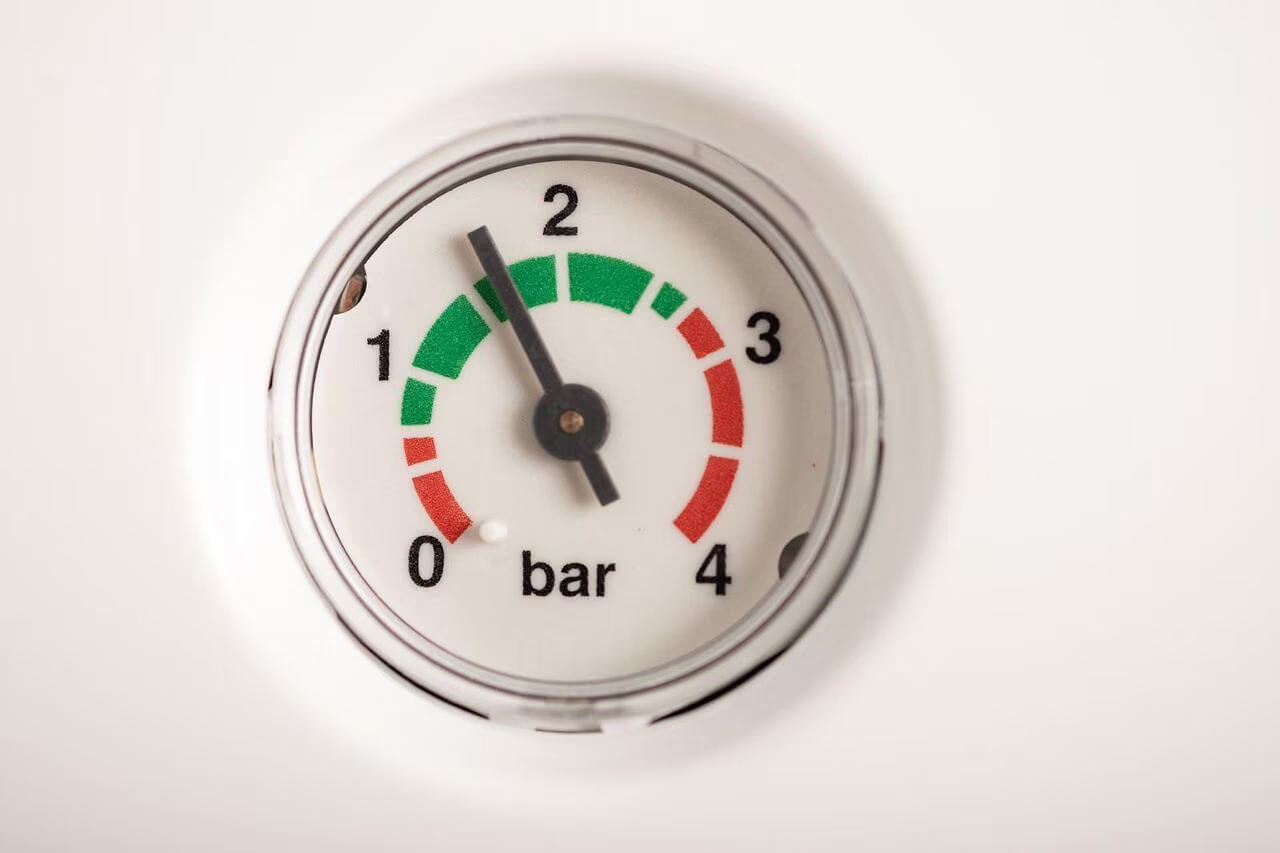
Keep a close watch on the pressure gauge.
Once the pressure reaches just over 1 bar (do not exceed 1.5bar), close both taps.
Safety note (See gauge)
Do not overfill the pressure past 1.5 bar.
Overfilling can damage the boiler and heating system.
Ideal Boiler – External Filling Loop
A common setup on Ideal boilers is an external filling loop.
This is usually a silver braided hose connecting the mains cold water supply to the heating system pipework.
Step 1
You can identify an external filling loop by locating two valves:
Note: Some set-ups only have 1 lever – this is normal.
Step 2 – Open the First Valve (Door)
Slowly open either one of the black levers — it does not matter which one you open first.
Think of this like “opening the first door”
At this stage, water is allowed to travel up to the second valve, but nothing will happen yet.
You may hear a faint sound of water, but the boiler pressure will not increase at this point.
Step 3 – Open the Second Valve (Door) VERY Slowly
Now, very slowly open the second black lever.
This is the second door.
Once this door is opened, water is allowed into the boiler and heating system.
Open this valve a tiny amount only — do not open it fully.
You should hear water running, and the pressure on the gauge will begin to rise.
Move the lever gently, as if you are just cracking a door open, not swinging it wide.
Blue Flame Tip
Opening this valve too quickly can cause the pressure to rise too fast.
Step 4 (Be very careful here)
Keep a close watch on the pressure gauge.
Once the pressure reaches just over 1 bar (do not exceed 1.5bar), close both taps.
Safety note (See gauge)
Do not overfill the pressure past 1.5 bar.
Overfilling can damage the boiler and heating system.

Ideal Boiler – External Filling Loop
A common setup on Ideal boilers is an external filling loop.
This is usually a silver braided hose connecting the mains cold water supply to the heating system pipework.
Step 1
You can identify an external filling loop by locating two valves.
Note: Some set-ups only have 1 lever – this is normal
Step 2 – Open the First Valve (Door)
Slowly open either one of the black levers — it does not matter which one you open first.
Think of this like “opening the first door”
At this stage, water is allowed to travel up to the second valve, but nothing will happen yet.
You may hear a faint sound of water, but the boiler pressure will not increase at this point.
Step 3 – Open the Second Valve (Door) VERY Slowly
Now, very slowly open the second black lever.
This is the second door.
Once this door is opened, water is allowed into the boiler and heating system.
Open this valve a tiny amount only — do not open it fully.
You should hear water running, and the pressure on the gauge will begin to rise.
Move the lever gently, as if you are just cracking a door open, not swinging it wide.
Blue Flame Tip
Opening this valve too quickly can cause the pressure to rise too fast.
Step 4 (Be very careful here)
Keep a close watch on the pressure gauge.
Once the pressure reaches just over 1 bar (do not exceed 1.5bar), close both taps.
Safety note (See gauge)
Do not overfill the pressure past 1.5 bar.
Overfilling can damage the boiler and heating system.
Blue Flame Safety Tip
⚠️ Do NOT touch the yellow lever or tap under your boiler.
-
Yellow taps are always GAS
-
Turning this will shut off the gas supply
-
This can cause:
-
The boiler to stop working
-
Ignition faults
-
Error codes that require an engineer to reset
-
👉 Boiler pressure is never topped up using a yellow tap.
If you’re unsure which tap you’re looking at — stop and check before touching anything.
Need Help?
If you’re unsure or your boiler keeps losing pressure, it’s best to have it checked properly.
A quick inspection can prevent:
-
Boiler shutdowns
-
Ongoing pressure loss
-
Costly internal damage
Not sure it’s safe to continue?
We can check the system, identify the cause, and put it right properly.