






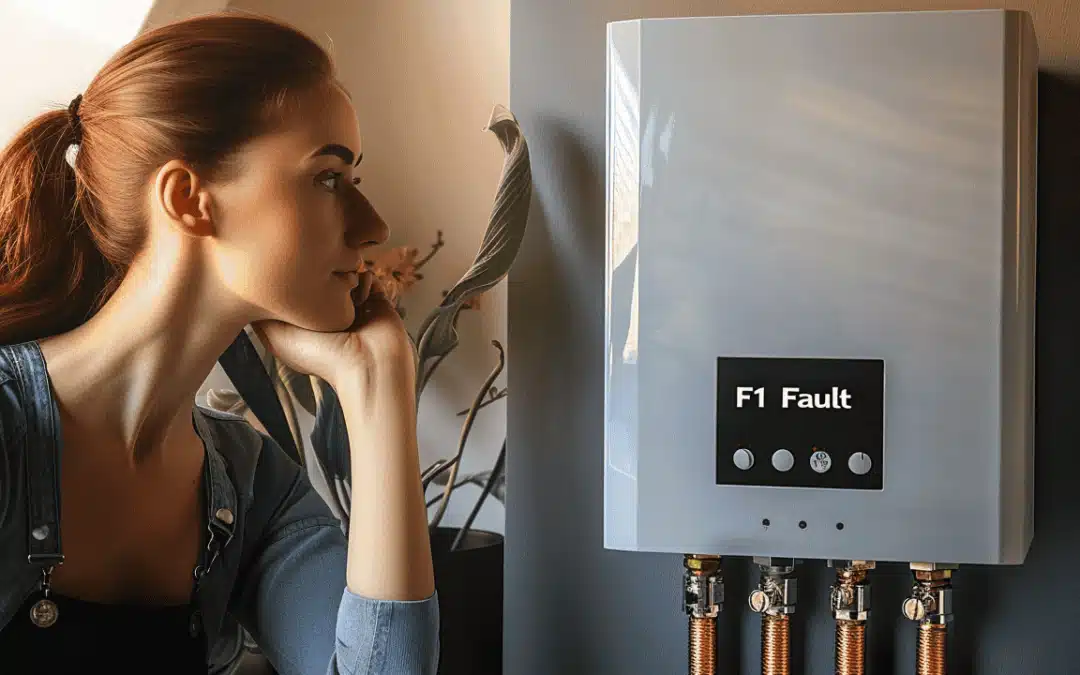
Boiler Fault Codes Explained – What They Mean & When to Worry
Modern boilers are designed to monitor themselves constantly. When something isn’t right, the boiler displays a fault code or error message to protect itself and your home.
While fault codes can look technical or worrying, most of them fall into clear categories once you understand what the boiler is actually reacting to.
Although fault codes vary between manufacturers, most problems fall into a handful of common categories. Understanding what your boiler is trying to tell you can help you decide whether a simple check is safe or whether professional attention is needed.
This guide explains:
- What boiler fault codes really mean
- Which faults are minor and which are serious
- When it’s safe to wait — and when you should stop and call an engineer.
What is a boiler fault code?
A boiler fault code is a safety response, not a diagnosis.
Your boiler uses sensors to monitor:
- Water pressure
- Temperature
- Flame detection
- Fan operation
- Gas safety systems
- Internal electronics
When one of these readings moves outside a safe operating range, the boiler will either:
- Show a warning code, or
- Lock out completely to prevent damage or danger.
The code tells an engineer where the boiler detected a problem, not necessarily the exact component at fault.
Why boilers lock out instead of “powering through”
Older boilers often kept running until something failed catastrophically.
Modern boilers do the opposite.
If a boiler:
- Can’t confirm a safe flame
- Detects overheating
- Loses pressure
- Can’t move combustion gases correctly
…it will stop itself deliberately.
A lockout is often the boiler protecting itself — and you.
The most common types of boiler fault codes (explained simply)
1. Low pressure fault codes
These are among the most common faults engineers see.
Low pressure usually means:
- Water has escaped somewhere in the system
- The system hasn’t been topped up correctly
- Pressure has dropped over time due to expansion and contraction
The boiler shuts down because it cannot circulate water safely.
Important: Repeated pressure loss is a symptom, not the fault itself.
2. Ignition or flame failure fault codes
These appear when the boiler:
- Tries to light but cannot detect a flame
- Loses flame shortly after ignition
Common causes include:
- Gas supply interruptions
- Blocked condensate pipes, particularly in cold weather
- Dirty or worn ignition components
- Low system pressure preventing safe ignition
These faults often appear intermittently before becoming permanent.
3. Overheating and circulation fault codes
These faults occur when heat cannot move away from the boiler fast enough.
Typical causes include:
- Sludge or debris restricting flow
- Faulty pumps
- Stuck valves
- Air trapped in the system
The boiler shuts down to prevent internal damage to the heat exchanger.
4. Fan, flue or air pressure fault codes
Your boiler must confirm it can safely remove combustion gases.
Faults in this category can be triggered by:
- Fan speed issues
- Flue blockages or restrictions
- Pressure sensor errors
Because these faults relate to combustion safety, they should never be ignored.
5. Electrical or PCB fault codes
These are less common but more complex.
They may involve:
- Voltage irregularities
- Internal communication errors
- Component feedback mismatches
Sometimes the issue is external, such as the power supply. Sometimes it indicates a failing control board.
These faults almost always require professional diagnosis.
Are boiler fault codes dangerous?
Some are minor. Some are not.
A useful rule of thumb:
- Warning code → the boiler may still run but needs attention.
- Lockout code → the boiler has shut down for safety.
Anything involving:
- Gas
- Combustion
- Overheating
- Flue operation
…should always be treated as engineer-only territory.
Can you reset a boiler fault code?
Sometimes — but only once.
A reset can clear:
- Temporary ignition failures
- Momentary pressure or sensor glitches
However:
- Repeated resets mask the real fault.
- Multiple lockouts usually mean an underlying issue.
If a fault code returns after a reset, the boiler is telling you something.
Why fault codes vary by manufacturer
Each manufacturer uses different:
- Sensors
- Safety thresholds
- Coding systems
An “EA” fault on one boiler does not mean the same thing on another.
That’s why fault codes must always be interpreted in the context of the specific boiler brand and model.
When to call a Gas Safe engineer immediately
Call an engineer straight away if:
- The boiler repeatedly locks out
- Fault codes return after resetting
- You smell gas or notice soot marks
- The boiler overheats or shuts down suddenly
- Hot water or heating stops completely
- You notice water leaking from the boiler
- The boiler starts making unusual banging or kettling noises
- Radiators remain cold despite the boiler running
Fault codes are early warning systems — acting early usually prevents bigger repairs later.
Understanding the code is only the first step
Fault codes point towards a problem, but they don’t replace proper diagnosis.
An experienced engineer looks at:
- The fault code
- The boiler’s behaviour before shutdown
- System pressure and flow
- Historical patterns
This is why two boilers displaying the same code may require completely different repairs. The fault code provides a starting point, but proper diagnosis identifies the underlying cause and ensures the problem is fixed correctly.
Boiler fault code guides by manufacturer
If your boiler is showing a fault code, use the correct manufacturer guide below for accurate explanations:
Further fault code help:
Need Help With a Boiler Fault?
If your boiler repeatedly locks out, loses pressure, or displays an error code you don’t understand, our Gas Safe engineers can help diagnose the problem safely and recommend the most cost-effective repair→
FAQs
1. What does a boiler fault code actually mean?
A boiler fault code is the appliance’s way of telling you why it has stopped operating safely.
Modern boilers constantly monitor pressure, temperature, ignition, sensors, pumps and airflow. When something falls outside safe limits, the boiler locks out and displays a code rather than continuing to run unsafely.
Importantly, a fault code is not a parts diagnosis — it’s a starting point that narrows down the type of problem, such as pressure, ignition, circulation or sensor faults.
2. Are boiler fault codes the same across all manufacturers?
No. Each manufacturer uses its own fault code system, even though the underlying problems are often similar.
For example:
- Low water pressure
- Ignition failure
- Fan or airflow issues
- Sensor or circulation faults
The code format, numbering and wording differ between brands, which is why the same issue can look very different on different boilers.
3. Is a boiler fault code dangerous?
A fault code itself is not dangerous — it usually means the boiler has shut down to prevent risk.
However, some codes indicate conditions that should not be ignored, such as:
- Repeated lockouts
- Loss of pressure that keeps returning
- Overheat or circulation problems
- Ignition failures
- Fan or flue-related faults
In these cases, repeatedly resetting the boiler without fixing the cause can make the situation worse.
4. Can I fix a boiler fault code myself?
Some fault codes relate to simple system conditions, such as low pressure, and may be resolved safely if you understand what’s happening.
However:
- Fault codes do not confirm the exact cause.
- Repeated resets can mask underlying issues.
- Many faults require testing under load.
If a code keeps returning, the safest and most cost-effective option is proper diagnosis rather than trial-and-error.
5. Why does my boiler keep showing the same fault code?
Recurring fault codes usually mean the symptom has been cleared, but the underlying cause hasn’t.
Common reasons include:
- Topping up pressure without fixing the reason it dropped.
- Resetting ignition faults without addressing airflow or gas supply issues.
- Temporary circulation recovery masking pump or blockage problems.
When a code returns regularly, it’s a sign the boiler is protecting itself, not malfunctioning randomly.
6. Do boiler fault codes always mean the boiler is broken?
No. Many fault codes are system-related rather than internal boiler failure.
In real-world callouts, engineers often find:
- Airlocks
- Low system pressure
- Stuck valves
- Circulation problems
- External pipework issues
The boiler is often doing exactly what it should — shutting down until conditions are safe again.
7. Is it safe to keep resetting a boiler with a fault code?
Occasional resets can be acceptable, but repeated resets are a warning sign.
If a boiler needs frequent resetting:
- Safety conditions are not being met consistently.
- The fault is being bypassed rather than fixed.
- Components may be stressed unnecessarily.
A boiler that locks out repeatedly is asking for diagnosis, not persistence.
8. When should I call an engineer for a fault code?
You should seek professional help if:
- The fault code keeps returning.
- The boiler loses pressure repeatedly.
- There’s no heating or hot water.
- The boiler locks out shortly after resetting.
- You notice water leaking from the boiler.
- The boiler starts making unusual noises.
- You smell gas or suspect something unsafe.
Accurate diagnosis prevents unnecessary parts replacement and helps avoid further damage, inconvenience and downtime.