











Boiler Leaking Water – Causes, Risks & What To Do
A boiler leaking water is one of the most common boiler problems homeowners experience — and one of the easiest to misunderstand. Some leaks are minor and related to drainage or pressure changes. Others indicate internal stress or component failure that should never be ignored.
This guide explains why boilers leak, what the leak usually means, when it becomes a safety concern, and what to do next, based on real engineer experience rather than generic advice.
What does it actually mean when a boiler is leaking?
A boiler is a sealed, pressurised appliance. Under normal operation, no water should escape from the boiler itself.
When a leak appears, it usually means one of the following is happening:
-
A component designed to contain water is no longer sealing correctly
-
System pressure is forcing water out through a safety route
-
Condensate water is not draining away as intended
The most important thing to understand is this:
A boiler leak is almost never the root fault — it is a visible symptom of another underlying issue.
Common places a boiler can leak from
Where the water appears is often the first and most useful clue.
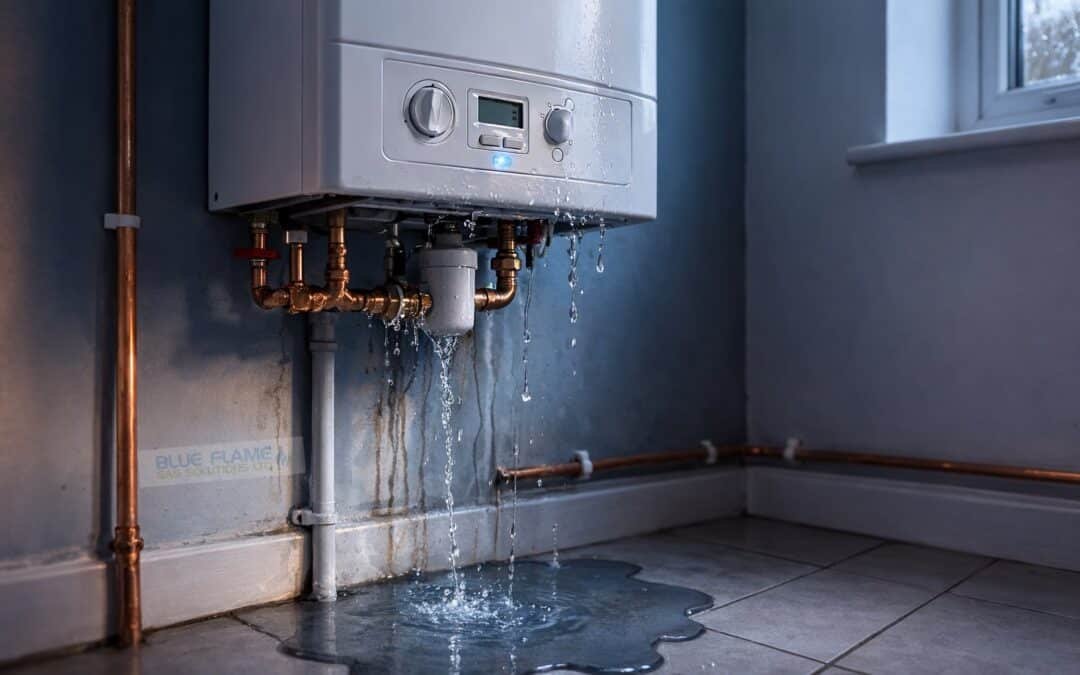
From underneath the boiler
Leaks from the base of the boiler are often linked to:
-
Internal valves or pump seals
-
Pipe connections loosening over time
-
The pressure relief valve discharging
-
Condensate trap or internal drainage issues
From the top or casing area
Water appearing higher up the boiler may suggest:
-
Internal pipework or heat-related expansion issues
-
Condensation forming inside the casing
-
Corrosion or long-term wear
Only when the heating is running
If leaks appear when the heating is on but stop when it’s off, pressure and expansion are usually involved.
Only when hot water is used
Leaks linked to hot water use can point toward diverter valve operation, plate heat exchanger stress, or domestic hot water demand triggering pressure changes.
From the condensate pipe
Condensate water is normal, but leaks or drips can occur when:
-
The pipe is blocked or frozen
-
Internal traps become displaced
-
Connections loosen
Not actually the boiler at all
In some cases, nearby pipework or radiator valves can leak and make it look like the boiler itself is at fault.
Why boilers start leaking over time
Boilers operate under constant heat and pressure. Over years of use, this causes gradual wear.
Common contributing factors include:
Pressure stress
Repeated heating and cooling cycles cause components to expand and contract. Over time, seals weaken and safety valves operate more frequently.
Component wear
Valves, pumps, and joints sit in hot system water year after year. Eventually, materials degrade.
Corrosion and poor water quality
Dirty system water accelerates wear and can corrode internal components, especially in older systems or poorly maintained installations.
Incorrect system pressure
Boilers that regularly operate above their ideal pressure are far more likely to develop leaks.
Is a leaking boiler dangerous?
Sometimes yes — sometimes no. The risk depends on the cause, not the amount of water.
Higher-risk situations
-
Water leaking inside the boiler casing
-
Water dripping onto electrical components
-
Sudden pressure loss combined with visible leaking
-
Leaks accompanied by fault codes or shutdowns
In these situations, the boiler should be turned off and checked.
Lower-risk situations
-
Minor condensate drips
-
Occasional pressure relief discharge
These still need attention but are generally less urgent.
What to do if you notice your boiler leaking
-
Do not ignore it
Leaks rarely resolve on their own. -
Check the pressure gauge
High pressure often explains why water is being discharged. -
Identify where the water is coming from
Underneath, inside the casing, outside pipework, or condensate line. -
Turn the boiler off if the leak is continuous or heavy
Especially if water is pooling. -
Avoid attempting internal repairs yourself
Boilers are sealed, pressurised appliances.
What you should not do
-
Do not keep topping up the pressure without understanding why it’s dropping
-
Do not cap or block discharge pipes
-
Do not remove boiler panels
-
Do not assume leaks are “normal”
Temporary fixes often lead to more serious faults later.
Can a leaking boiler be repaired?
In many cases, yes — particularly when:
-
The boiler is otherwise operating normally
-
The leak is from a replaceable component
-
The system water quality is reasonable
However, leaks caused by internal corrosion or structural failure may indicate the boiler is nearing the end of its service life.
A proper assessment looks at:
-
Boiler age and condition
-
Cause of the leak
-
Likelihood of recurrence
-
Overall system health
Identify the exact type of boiler leak
The next step is narrowing down exactly what kind of leak you are dealing with. Each of the guides below focuses on one specific scenario and explains what it usually means.
-
Boiler leaking from the bottom – internal components, valves, and pressure-related causes
-
Boiler leaking from the top – internal pipework, condensation, and casing-level issues
-
Boiler leaking when heating is on – pressure rise and thermal expansion faults
-
Boiler leaking when hot water is used – diverter and hot water demand-related causes
-
Condensate pipe leaking or dripping – drainage vs fault-related leaks
-
Radiator or pipe leaks that look like a boiler leak – ruling out false boiler faults
Each guide breaks the problem down clearly, without guesswork.
Key takeaways
-
A leaking boiler is always a symptom, not the fault itself
-
The location and timing of the leak matter more than the amount of water
-
Some leaks are manageable; others require immediate shutdown
-
Pressure and long-term wear sit behind many boiler leaks
-
Correct diagnosis prevents unnecessary breakdowns and cost
If you’re unsure what you’re seeing, the safest approach is always to have the issue properly assessed rather than guessed at.
FAQs
Why is my boiler leaking water?
A boiler can leak for several reasons, including internal seal failure, corrosion, pressure problems, condensate issues, or leaks from connected pipework. Some leaks are harmless condensation, while others indicate component failure that needs urgent attention.
Is a leaking boiler dangerous?
Yes, it can be. Water leaks can damage electrical components, cause corrosion, and in severe cases lead to boiler shutdown or unsafe operation. Any active or unexplained leak should be assessed by a Gas Safe registered engineer.
Can I keep using my boiler if it’s leaking?
That depends on the cause. Minor condensate dripping may be safe, but leaks from internal components, pressure relief valves, or pipe joints can worsen quickly. If in doubt, turn the boiler off and seek professional advice.
Does a boiler leak mean it needs replacing?
Not always. Many leaks are repairable if caught early. However, persistent leaks caused by internal corrosion or heat exchanger failure can make replacement more economical, especially on older boilers.
What should I do first if I notice a boiler leak?
Safely isolate the boiler if possible, avoid touching electrical components, and check where the water appears to be coming from. Do not attempt internal repairs yourself — a qualified engineer should diagnose the issue.
Is a boiler leak covered by warranty or boiler cover?
This depends on the type of fault, the boiler’s age, and the terms of your warranty or cover plan. Wear-and-tear issues or corrosion are not always covered, which is why early diagnosis matters.
Can a boiler leak cause low pressure or heating problems?
Yes. Water loss often leads to falling system pressure, radiator issues, noisy operation, or the boiler locking out altogether. Leaks and pressure problems are commonly linked.
How urgent is a leaking boiler repair?
Any visible leak should be treated as urgent. Even slow drips can escalate, causing internal damage, water damage to your property, or sudden boiler failure if left unresolved.