











Boiler Kettling Noise – Causes & What It Really Means
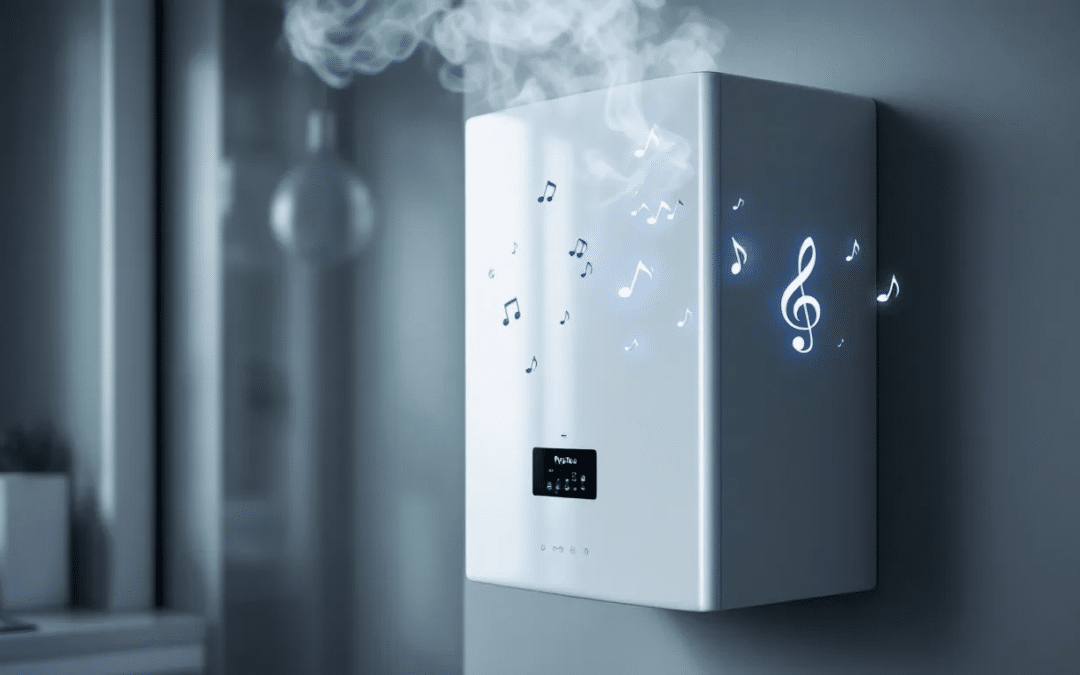
A kettling boiler noise is named after the sound it resembles — a kettle boiling.
It’s usually described as a high-pitched whistling, roaring, or rumbling noise coming from inside the boiler when it’s running.
Unlike other boiler noises, kettling is a strong indicator that water inside the boiler is overheating, almost always due to restricted heat transfer or poor circulation.
What Does a Kettling Boiler Sound Like?
Homeowners often describe kettling as:
-
A whistling or hissing noise
-
A roaring or boiling sound
-
Noise that builds while the boiler is firing
-
Sounds worse when heating hot water
The noise comes from inside the boiler casing, not from radiators or pipework.
What Causes a Boiler to Kettle?
Limescale on the Heat Exchanger (Most Common Cause)
The most common cause of kettling is limescale build-up on the heat exchanger.
Limescale acts as an insulating layer, which means:
-
Heat cannot transfer properly into the water
-
Water trapped in small areas overheats
-
Steam bubbles form and collapse
-
The boiling-kettle noise is created
This is especially common in hard-water areas and in systems without proper scale protection.
Restricted Water Flow Through the Boiler
Kettling can also occur when water cannot circulate fast enough through the boiler.
This can be caused by:
-
Sludge or debris in the system
-
Blocked or scaled heat exchanger channels
-
Partially closed valves
-
Circulation issues within the boiler
When heat builds faster than it can be carried away, kettling occurs.
Scaled Plate Heat Exchanger (Combi Boilers)
On combi boilers, kettling may only happen when hot water is being used.
This often points to a scaled plate heat exchanger, which can cause:
-
Kettling noises during hot water demand
-
Fluctuating hot water temperature
-
Reduced hot water flow
This is a common issue where scale protection hasn’t been fitted.
Overheating Due to Internal Control Issues
Less commonly, kettling can be linked to:
-
Faulty temperature sensors
-
Poor burner modulation
-
Internal control faults causing excessive heat output
These issues require proper diagnosis by a Gas Safe engineer.
Is Kettling a Serious Problem?
Kettling is not usually dangerous in the short term, but it should never be ignored.
Left unresolved, it can lead to:
-
Heat exchanger damage
-
Reduced boiler efficiency
-
Higher gas bills
-
Premature component failure
-
Boiler lockouts or breakdowns
Kettling is best treated as an early warning sign, not just an annoying noise.
Can I Keep Using My Boiler If It’s Kettling?
You may still have heating and hot water, but continued use will:
-
Worsen scale build-up
-
Increase internal stress
-
Raise repair costs later
If the noise is persistent, loud, or getting worse, the boiler should be checked.
How Is a Kettling Boiler Noise Fixed?
The correct solution depends on the cause and may include:
-
Chemical descaling of the heat exchanger
-
Power flushing the heating system
-
Replacing a heavily scaled plate heat exchanger
-
Improving system circulation
-
Adding scale protection to prevent recurrence
Correct diagnosis matters — treating symptoms alone often leads to repeat problems.
How to Prevent Kettling in the Future
-
Annual boiler servicing
-
Magnetic system filters
-
Scale protection in hard-water areas
-
Address circulation issues early
-
Don’t ignore new boiler noises
Early intervention is far cheaper than component replacement.
Related Boiler Noise Guides
This guide focuses specifically with boiler kettling noises and the system-level causes behind them. Other boiler noises can sound similar but point to very different issues.
For a full overview of all common boiler noises — including knocking, humming, gurgling, and combustion-related sounds — visit the main Boiler Noises guide to identify what you’re hearing and what it usually means.
If the banging noise is loud, recurring, or coming directly from the boiler casing, it’s best to have the system professionally assessed. A proper diagnosis prevents unnecessary damage and ensures the real cause is resolved safely.
Read Our Guide: Boiler Noises – Causes, Meanings & What To Do
Need Further Assistance?