







Baxi Boiler Fault Codes – What They Mean & When to Worry
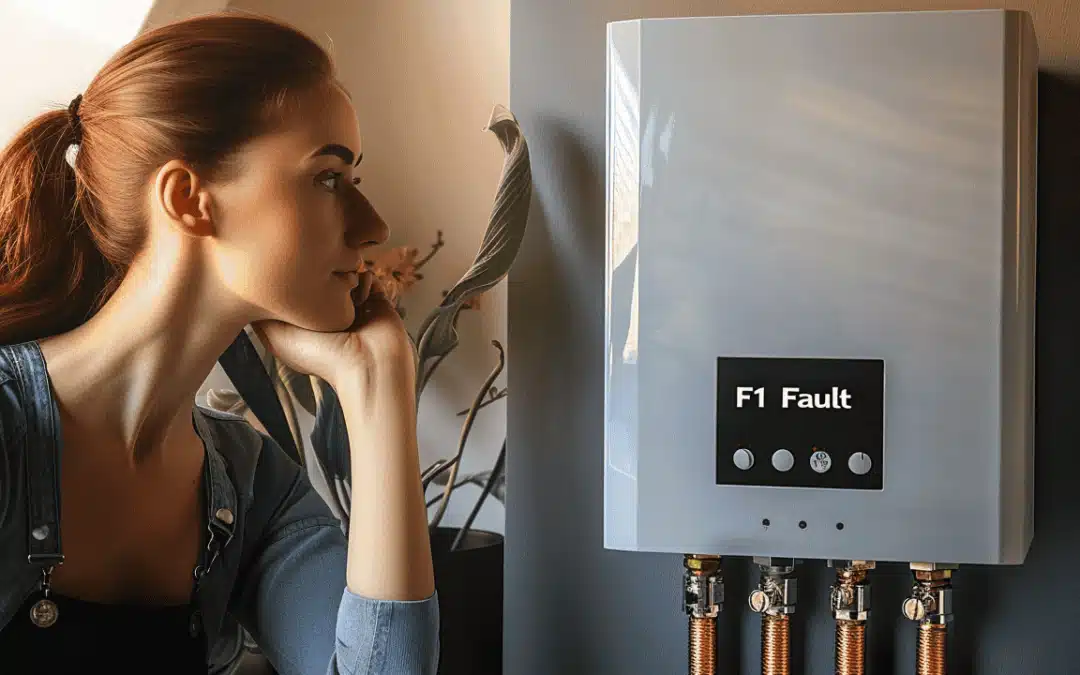
Modern Baxi boilers are designed to shut down safely when something isn’t operating within safe limits. When this happens, a fault code appears on the boiler display to indicate what condition has been detected.
A fault code doesn’t automatically mean the boiler has failed — but it does mean the boiler has detected a problem it cannot ignore. Some issues are minor and temporary, while others require professional attention.
This guide explains the most common Baxi boiler fault codes, how they behave in real homes, and when it’s safe to wait versus when you should call a Gas Safe engineer.
How Baxi Boiler Fault Codes Work
Baxi boilers constantly monitor key operating conditions, including:
-
System water pressure
-
Ignition and flame detection
-
Temperature and circulation
-
Fan and flue operation
-
Internal electrical safety checks
If a reading falls outside safe limits, the boiler will either:
-
Lock out completely, or
-
Suspend operation until the condition improves
The fault code shown is a diagnostic pointer — it tells engineers where to start, not just that the boiler has stopped.
Common Baxi Boiler Fault Codes Explained
E01 – Ignition Failure or Gas Supply Fault
What it means:
The boiler has attempted to ignite but has not detected a flame.
What usually causes it in practice:
-
Temporary gas supply interruption
-
Faulty ignition electrode or flame sensor
-
Condensate backing up internally
-
Repeated unsuccessful ignition attempts causing lockout
What to know:
A single reset may clear a one-off issue. Repeated E01 faults indicate an ignition or combustion-related problem that needs investigation.
E133 – Ignition or Gas Supply Fault
What it means
The boiler has failed to establish or maintain a flame.
Common causes engineers see
- Temporary interruption to the gas supply.
- Low incoming gas pressure.
- Ignition or flame detection issues.
- Condensate blockage.
- Repeated failed ignition attempts causing lockout.
What to know
A reset may clear a one-off interruption, but repeated E133 faults should be investigated by a Gas Safe engineer.
E168 – Internal PCB or Communication Fault
What it means
The boiler has detected an internal electrical or communication issue.
Common causes
- Temporary electrical interruption.
- Printed circuit board (PCB) fault.
- Wiring or connection problems.
- Voltage fluctuations.
What to know
Occasionally resetting the boiler restores operation, but recurring E168 faults usually require professional diagnosis.
E02 – Overheat Fault
What it means:
The boiler temperature has exceeded safe operating limits and shut down to protect itself.
Common real-world causes:
-
Restricted water circulation
-
Sludge or debris in the system
-
Pump performance issues
-
Closed or partially closed valves
-
Air trapped in pipework or radiators
Why this matters:
Overheating stresses internal components and should never be ignored, even if the boiler resets.
E10 / E119 / H02 / 06 – Low Water Pressure
What it means:
System pressure has dropped below the boiler’s minimum safe operating level.
Important update:
On newer Baxi models, low pressure is commonly displayed as H02 / 06.
Older models may show E10 or E119, but all three codes point to the same issue — insufficient system pressure.
Common causes engineers see:
-
Small leaks from radiators, valves, or pipework
-
Pressure relief valve discharging
-
Expansion vessel issues
-
Natural pressure loss over time
Key insight:
Topping up the pressure once is usually fine.
If pressure keeps dropping, there is an underlying fault that needs correcting — not repeated topping up.
E20 / E28 – Temperature Sensor Fault
What it means:
The boiler is receiving incorrect or inconsistent temperature readings.
Usually caused by:
-
Faulty thermistor
-
Wiring or connection problems
-
Internal component degradation
These faults do not resolve on their own and typically worsen over time.
E40 / E41 – Fan or Flue Fault
What it means:
The boiler cannot confirm that combustion gases are being safely expelled.
Common real-world causes:
-
Fan failure or poor fan performance
-
Air pressure switch issues
-
Flue obstruction or restriction
-
Condensate-related flue problems
Safety note:
These faults exist to prevent unsafe operation. The boiler should not be used until the issue is resolved.
E50 / E110 – Internal Temperature or Sensor Errors
What it means:
The boiler has detected abnormal internal operating conditions.
Often linked to:
-
Heat exchanger issues
-
Scale or sludge buildup
-
Sensor inaccuracies
-
Poor system water quality
These faults tend to become more frequent if left untreated.
Do All Baxi Fault Codes Mean the Boiler Is Broken?
No — but every fault code means something needs attention.
Some faults are caused by:
-
Temporary operating conditions
-
Minor system imbalances
-
Early warning signs
Others indicate:
-
Safety-related shutdowns
-
Component wear or failure
-
Poor system health or maintenance history
A fault code that keeps returning is never normal and should always be investigated.
In many cases, the fault code is simply the boiler’s way of protecting itself and highlighting a condition that needs attention.
When You Should Call an Engineer
You should arrange a professional inspection if:
-
The same fault code keeps reappearing
-
The boiler locks out repeatedly
-
Pressure continues to drop after topping up
-
The boiler overheats during operation
-
Fan or flue-related faults are displayed
Addressing faults early almost always prevents more expensive repairs later.
Important Safety Reminder
Never attempt to bypass safety devices or dismantle boiler components.
Fault codes are there to protect your home and the people inside it.
Further Help With Boiler Fault Codes
Want to understand how fault codes work across different boiler manufacturers?
Read our complete guide:
→ Boiler Fault Codes Explained – What They Mean & When to Worry