









Boiler Not Working – No Heating or Hot Water
If your boiler has stopped working and you have no heating or hot water, it usually means the boiler has shut itself down to protect the system. Modern boilers are designed to lock out when they detect a fault, unsafe condition, or abnormal operating pressure.
While the situation is frustrating, most causes fall into a small number of predictable categories. Some are simple external issues, while others require a Gas Safe engineer to diagnose safely.
This guide explains why boilers stop working, what the most common causes are, and what you should do next.
What “no heating or hot water” usually means
When a boiler provides neither heating nor hot water, it typically means:
-
The boiler has failed to ignite
-
The boiler has locked out due to a safety fault
-
The boiler is powered but unable to circulate water
-
A system condition (pressure, flow, condensate) is preventing operation
In most cases, the boiler is not broken beyond repair — it is responding correctly to an abnormal condition.
Common reasons a boiler stops working completely
Low boiler pressure
Low system pressure is one of the most frequent causes of total boiler shutdown.
Most boilers will stop operating if pressure drops below their minimum safe range. This often happens gradually and may not be noticed until heating and hot water both fail.
Pressure loss is commonly caused by:
-
Minor system leaks
-
Radiator valve seepage
-
Recently bled radiators
-
Expansion vessel issues
Electrical or power supply problems
If the boiler has no power, it cannot operate.
This can be caused by:
-
A tripped fused spur
-
A local power cut
-
A blown fuse
-
An internal electrical fault
Even if the boiler display is lit, unstable power or internal electrical issues can prevent ignition.
Boiler lockout or fault condition
Boilers are designed to shut down if they detect unsafe conditions.
Common lockout triggers include:
-
Ignition failure
-
Flame detection problems
-
Overheating
-
Internal sensor faults
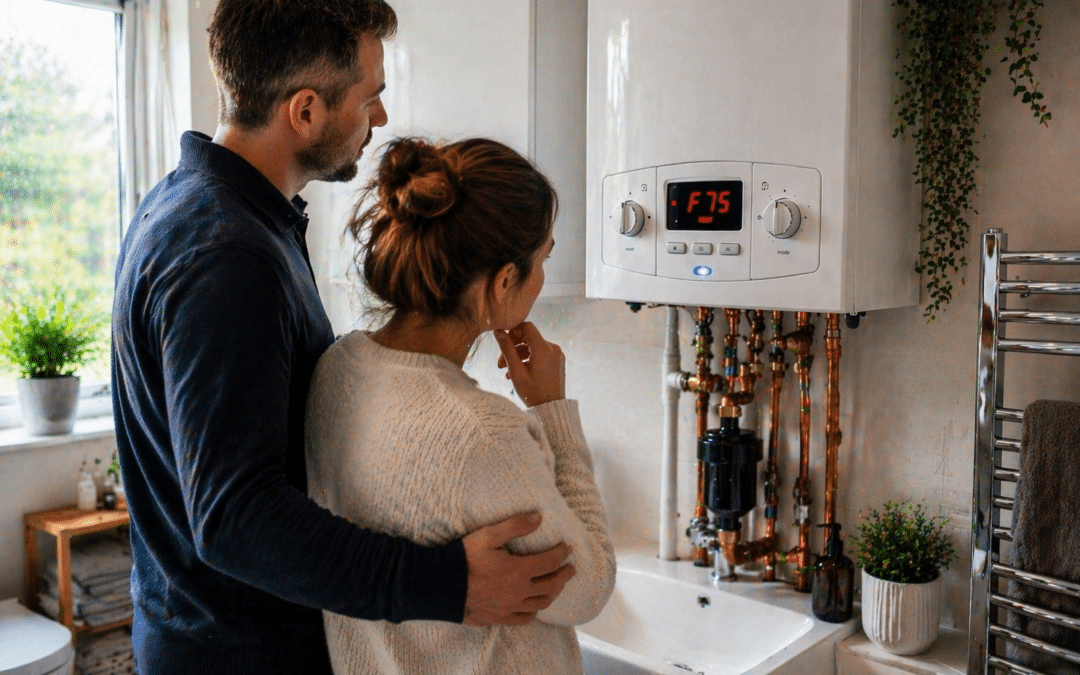
When this happens, the boiler may display a fault code or warning symbol.
Frozen or blocked condensate pipe
In cold weather, the condensate pipe can freeze or become blocked.
When this happens:
-
The boiler cannot safely discharge acidic condensate
-
The boiler shuts down to prevent internal damage
-
Heating and hot water both stop
This is especially common during winter cold snaps.
Circulation or pump issues
If water cannot circulate through the system, the boiler will not fire correctly.
Possible causes include:
-
A seized or failed pump
-
Sludge or debris restricting flow
-
Closed or stuck valves
-
Air trapped in the system
Without proper circulation, the boiler cannot transfer heat safely.
Internal boiler faults
Some issues are internal and cannot be safely diagnosed without tools and testing.
These may include:
-
Fan faults
-
Gas valve issues
-
PCB (control board) faults
-
Sensor failures
These faults often cause repeated lockouts or intermittent operation before complete failure.
What you can safely check
There are a few basic, safe checks you can make before calling an engineer:
-
Check the boiler display for warning lights or fault codes
-
Confirm the boiler has electrical power
-
Check system pressure (if visible on the boiler gauge)
-
Check your thermostat and programmer are calling for heat
-
Look for obvious frozen condensate pipe symptoms in winter
If the boiler does not restart after basic checks, do not keep resetting it — repeated resets can worsen certain faults.
When to call a Gas Safe engineer
You should arrange a professional repair if:
-
The boiler repeatedly locks out
-
Pressure continues to drop
-
There is no ignition or flame
-
Fault codes keep returning
-
The boiler shuts down shortly after starting
Gas, combustion, and electrical components must only be tested by a qualified engineer.
Why boilers often “fail suddenly”
Many boilers don’t actually fail overnight.
Instead, issues often build up slowly:
-
Pressure drops over weeks
-
Pumps begin sticking
-
Sensors drift out of tolerance
-
Sludge gradually restricts flow
The boiler only shuts down once safety limits are crossed.
Summary
A boiler that isn’t working and provides no heating or hot water is usually responding correctly to a fault or unsafe condition.
While some causes are simple, many require professional diagnosis. Acting early often prevents more serious damage and reduces repair costs.
If your boiler still isn’t working, it’s time for a full system diagnosis.
Further help if your boiler still isn’t working
For a full overview of all common causes, symptoms, and next steps, see our main guide: