











Boiler Pressure Keeps Dropping – What’s Causing It?
If you keep topping up your boiler pressure every few days (or every week) and it keeps falling again, that’s a sign something isn’t quite right. It’s one of the most common boiler issues we see across South Wales — and while it can be a simple fix, it can also indicate a fault that needs attention before it turns into a breakdown.
In this guide, we’ll explain the most likely causes of repeated pressure loss, what you can safely check at home, and when it’s time to book an engineer.
Quick reassurance: A healthy system normally holds steady pressure for months. If yours is dropping regularly, it’s almost always due to one of the causes below.
“On most call-outs, we find the cause is usually a small hidden leak or expansion vessel issue.”
What Boiler Pressure Should Be (Normal Range)
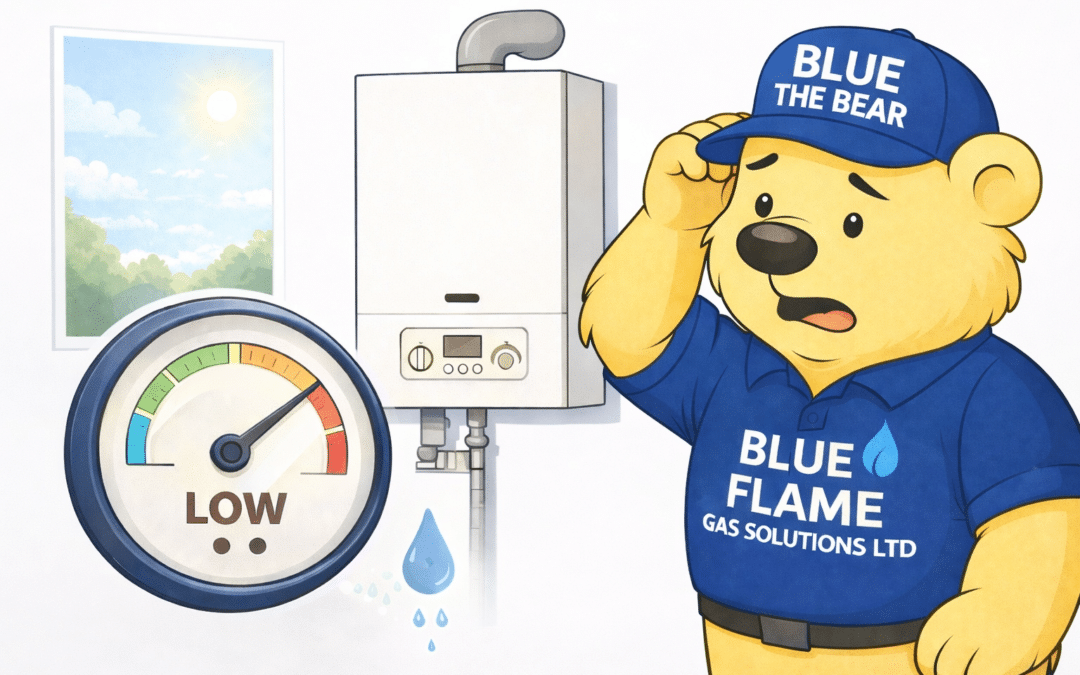
On most combi boilers, the “normal” cold pressure is typically around 1.0 to 1.5 bar. When the heating is running and the water expands, it may rise slightly (often to around 1.8–2.0 bar). The exact range can vary by system and boiler model.
If you’re constantly refilling to stay in range, the system is losing water somewhere — even if you can’t see it.
Why Your Boiler Pressure Keeps Dropping (Most Common Causes)
1) A Small Leak Somewhere on the Heating System
The most common reason for pressure loss is a leak — and it doesn’t need to be dramatic. Even a tiny drip can slowly reduce pressure over time.
Where to check:
- Radiator valves (TRVs and lockshield valves)
- Bleed valves at the top of radiators
- Radiator tails (where the radiator joins the pipework)
- Pipe joints under sinks, behind toilets, in cupboards
- Ceilings below bathrooms (any new staining)
What to look for: green/white staining, rusty marks, damp patches, or a “tide line” on carpet/underlay near pipe runs.
2) Pressure Relief Valve (PRV) Passing Water
Your boiler has a safety valve called a PRV. If system pressure gets too high, it releases water to protect the boiler. Sometimes, once a PRV has discharged, it doesn’t reseal perfectly — so it can continue to “weep” small amounts of water.
Simple check: look outside for a copper pipe that terminates near an outside wall (often low level). If it’s dripping or leaving staining, that’s a clue.
3) Expansion Vessel Problems (One of the Big Ones)
The expansion vessel absorbs the pressure increase when the heating water expands. If it fails or loses its internal air charge, pressure can spike when heating is on and then drop again after the PRV releases water.
Typical signs:
- Pressure rises a lot when heating turns on
- Pressure drops after the boiler cools
- PRV discharge pipe drips during/after heating
- Boiler may show pressure fault or lockout
This is usually an engineer job (it needs correct testing and recharging — and sometimes the vessel needs replacing).
4) Leaks Inside the Boiler (Usually Hidden)
Some leaks don’t show externally. They can occur on internal seals, diverter valves, pump fittings, heat exchangers, or pressure sensors. Because the leak may evaporate on hot surfaces or drain internally, you might not see obvious water.
5) Filling Loop / Top-Up Valve Not Fully Closed
After topping up, if the filling loop isn’t closed properly, it can cause pressure instability (and in some cases let water pass unexpectedly). Make sure the valve(s) are fully closed after topping up.
6) Recent Bleeding of Radiators (Normal, Once)
If you’ve bled radiators recently, the pressure will drop — that’s normal. You top up once and it should then hold. If it keeps dropping weeks later, that’s not from bleeding alone.
Safe DIY Checks You Can Do (Without Touching Anything Risky)
- Take a photo of the pressure gauge (or note the number) morning and night for 2–3 days.
- Check around all radiator valves with dry tissue — even a tiny seep will show.
- Look at the PRV discharge pipe outside for dripping or staining.
- Check cupboards and visible pipework for damp patches or green/white deposits.
When Pressure Loss Becomes Urgent
Book an engineer promptly if:
- The pressure drops to near zero repeatedly
- The boiler keeps locking out / showing low pressure faults
- You see water from the outside discharge pipe regularly
- Pressure swings widely when the heating turns on
- You’re topping up more than once a week
Running a boiler with recurring pressure loss can cause repeated lockouts, pump issues, corrosion, and can turn a small problem into a bigger repair.
Can I Keep Using My Boiler If The Pressure Keeps Dropping?
If the pressure is still within range and you’re not seeing any obvious leaks, you may get heating/hot water temporarily — but you shouldn’t ignore the root cause. If it’s an expansion vessel or PRV issue, repeated top-ups can mask the problem and lead to bigger issues later.
Rule of thumb: topping up once after radiator bleeding is normal. Topping up regularly is not.